
 Software Development
 Security Services
 Cloud Services
 AI Services
 Other Services






 TechMagic Academy


How to Choose the Right Web Development Stack
Last updated:7 March 2026

Building a website or web application starts with one critical decision: choosing the right web development stack. It directly influences your product’s architecture, performance, scalability, and even how fast your team can deliver.
At this stage, many projects make mistakes. Companies either overcomplicate things with trendy tools or pick a stack that doesn’t match their real needs. The result is slower development, higher costs, and painful rework down the line.
In this article, we’ll break down how to choose a technology stack for web application development, what actually matters, and how to avoid common mistakes. You’ll also learn how different technologies fit together and what defines a solid tech stack for web development in practice.
Key Takeaways
- Choosing the right stack affects performance, scalability, budget, and long-term maintenance.
- There is no universal answer to how to choose technology for web development because every product has different requirements.
- A strong stack should match your business goals, technical needs, and team expertise.
- Frontend, backend, database, and infrastructure choices all influence how the product works and grows.
- Serverless architecture can be a smart option for teams that want faster scaling and lower infrastructure overhead.
- The best web development technology stack is the one that supports your current product needs without limiting future growth.
What Is a Web Development Stack?
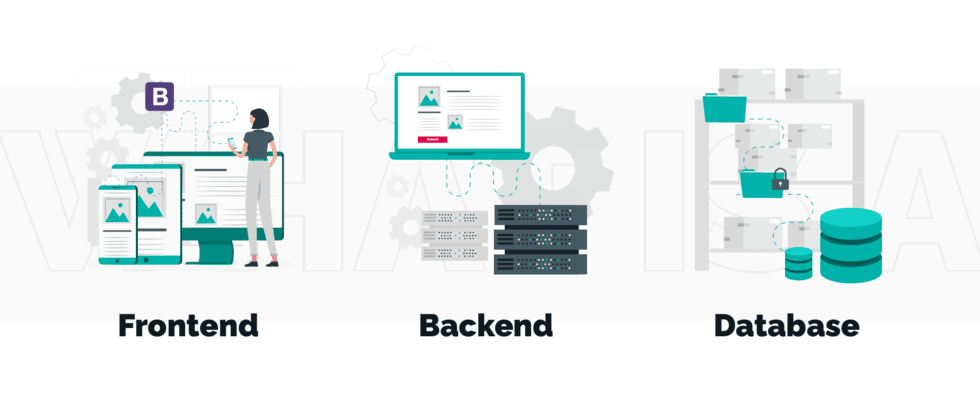
A web development stack is the combination of technologies used to build and run a web application. It includes frontend technologies that shape the user interface, as well as backend systems, databases, and infrastructure that handle logic, data processing, and application behavior. Simply put, it is the full set of tools behind how a product works.
A technology stack usually includes several key components: programming languages, frameworks, databases, a web server, and often cloud or infrastructure services. Together, they help deliver web pages, process requests, and manage data across the system. A well-chosen web development tech stack makes these parts work together without creating unnecessary complexity.
Understanding how a stack for web development is put together helps you make better technical decisions early on. The right setup affects not only performance and scalability, but also how easy it is for web developers to build, maintain, and improve the product over time.
To get a complete picture, we also recommend analyzing the list of the top web development frameworks.
Frontend
The frontend layer is responsible for everything users see and interact with, including layout, navigation, and dynamic interfaces. It is typically built with HTML, CSS, and JavaScript or TypeScript, supported by modern Javascript frameworks such as React; Angular or Vue.js. These tools simplify client side programming, help manage state, and improve performance for single page applications and other interactive experiences.
Modern frontend technologies do much more than render static content. They rely on the document object model to update content in real time, respond to user actions, and deliver a smooth user experience. Choosing the right frontend approach affects not only usability, but also development speed and maintainability.
Backend
The backend handles business logic, data processing, and communication between services. When selecting a backend framework, teams usually choose between traditional server-based architectures and more flexible approaches like a Serverless stack, which is now widely used for scalable applications.
Node.js remains a strong option because of its event-driven, non-blocking model, which helps handle many concurrent requests efficiently. It also allows teams to use JavaScript across both frontend and backend, which can simplify full stack web development. Other common options include Java, .NET, and Python, often paired with a Python framework for building APIs, web services, and scalable backend systems.
The backend development services are also where teams manage infrastructure-level concerns such as the operating system, third-party integrations, authentication, and internal business logic. This layer has a major impact on scalability, flexibility, and long-term system performance.
Database
The database layer is responsible for storing and managing application data. For traditional architectures, common options include PostgreSQL, MySQL, Oracle, and Microsoft SQL Server. These are widely used for systems that rely on structured data and predictable transactional workflows.
For more flexible or high-scale use cases, especially in cloud-based environments, teams often choose MongoDB, DynamoDB, Aurora, or similar managed solutions. In these setups, databases are often tightly connected with cloud services, which makes scaling easier and reduces operational effort.
The right database should match your data model, performance requirements, and expected growth. This becomes especially important when building complex web applications that need to stay stable under increasing load.
How to Choose Technology Stack for Web Development?
Choosing the right stack means aligning technology with your product goals, constraints, and long-term plans. If you’re wondering how to choose a technology stack for web application development, you need to look beyond trends and focus on how different tech stacks work in real conditions.
Below are the key factors that define the right technology stack for your project.
Project requirements
Everything starts with what you are actually building. The chosen technology stack must support your product’s core features, expected load, integrations, and business logic. This is especially important for dynamic websites, mobile apps, or systems that rely on data analytics and real-time processing.
Before you choose a tech stack, involve your team early and define clear requirements. A strong understanding of the product helps avoid overengineering and unnecessary tools. This stage is critical in web development stack choosing, as it sets the foundation for all further decisions.
This is why we highly recommend first connecting the team of developers to make a list of project specifications. This way, you can avoid unnecessary expenses for using newfangled technologies that you don't really need.
Project budget
Budget is not limited to development costs. It also includes hiring, infrastructure, maintenance, and scaling. While many tools are open source, the real cost comes from the technical expertise required to implement and support them.
Choosing widely adopted technologies often gives access to a larger talent pool and more predictable costs. It also reduces risks when scaling your development team. For startups, building an MVP is often the best approach. It allows you to validate the idea first and optimize the technology stack later.
If cost efficiency is a priority, consider cloud-based or serverless approaches. These reduce infrastructure overhead and simplify scaling, especially when combined with managed monitoring systems and cloud-native services.
Future scalability
Scalability is where many early decisions either pay off or create problems. The right tech stack should allow your product to grow without major rework. This includes handling more users, adding features, and integrating new services.
Modern architectures rely on modular design, clean dependencies, and scalable infrastructure. Whether you are building internal tools or complex web applications, your stack should support long-term evolution. A well-designed web development stack enables developers to extend the system without breaking existing functionality.
Deadline and development speed
Time to market plays a major role in popular tech stack selection. If you need to launch quickly, choose technologies that support rapid development process and are familiar to your team.
Widely used frameworks, strong ecosystems, and good documentation all improve development speed. They also make it easier to onboard new developers and avoid delays. In practice, the faster your team can deliver, the more competitive your product becomes.
Especially for startups, the faster you release the project, the better. This is why you should look for the most widespread and easy-to-use tools and technologies for web app development. In such a way, you will have enough time for a large-scale marketing campaign. At the same time, balance speed with long-term maintainability. Fast decisions should not compromise future scalability.
Security and reliability
Every application must comply with regulations and protect user data. The stack you choose should support secure development practices, including user authentication, data protection, and secure integrations.
Modern frameworks and platforms provide built-in security features, but they still require correct implementation. You also need proper workflow management, monitoring, and incident response processes. Security should be part of your stack from day one, not an afterthought.
What Technology Stack to Choose if You Decide to Move Serverless?
A serverless stack makes sense when you want to ship faster, reduce infrastructure overhead, and scale without managing servers yourself. The code still runs on servers, of course, but provisioning, scaling, and much of the operational work are handled by the cloud provider.
For many projects, that makes serverless a practical option for APIs, event-driven workflows, integrations, and products with uneven traffic. In many cases, it can become a strong tech stack for web development when flexibility and operational simplicity matter more than full infrastructure control.
A typical setup for serverless web applications includes several core layers:
- Static frontend for delivering the user interface
- API layer for handling client requests
- Compute functions for business logic and background processing
- Managed data or messaging services for storage, events, and asynchronous workflows
In AWS, that often means:
- S3 and CloudFront for the frontend
- API Gateway and Lambda for backend endpoints
- SNS, SQS, or EventBridge for asynchronous processing
Similar patterns exist on other platforms too, including Google Cloud Functions and related cloud services.
For the frontend, experts usually host the UI as a static application and deliver it through a CDN. That reduces latency, improves global performance, and keeps the delivery layer simple. On the backend, small functions handle requests, business logic, and background jobs, which works well for modular systems and independent web services.
Cost is one of the main reasons companies move in this direction, but it is not the only one. Serverless can improve release speed, simplify operations, and remove the need for many traditional infrastructure management tools. At the same time, it is not automatically the best web development technology stack for every product. Cold starts, service limits, vendor lock-in, and observability requirements mean you need proper architecture, logging, and monitoring systems from the start.
This model is a strong fit for products with variable load, distributed integrations, and clearly separated services. It is usually a weaker fit for large monoliths, long-running processes, or systems that need permanently active compute resources.
So when companies evaluate a web development stack for serverless, the real question is not whether the model is modern, but whether it matches the product’s architecture, growth pattern, and operational needs.
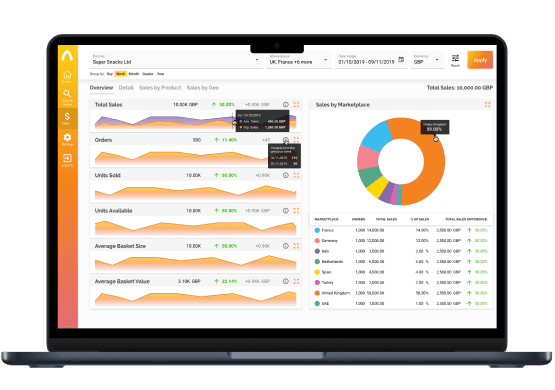
an E-commerce analytics app using JS and Serverless on AWS
Our Experience
Web development is the major branch of TechMagic's expertise. As a full-stack JavaScript development company with focus on AWS and Serverless, we choose the best technology stack for web development within our projects.
Let’s take a closer look at one of our latest projects, Acorn-I.
Our main challenge was to update the existing eCommerce smart platform with user-friendly, modern UX and make the data pipeline enhanced to support more service integrations as well as to be more scalable at a reasonable cost. As a result, let's see what our team did:
- performed front-end web development, having implemented ready-made diagrams, grids, maps, etc. with the help of Angular;
- modernized the existing data pipeline to implement the OOP concept and optimize algorithms;
- integrated machine learning into business logic to automatically generate scripts based on sales and user behavior data;
- created the infrastructure, improving the automation capabilities with the help of AWS Cloud Development Kit;
- provided integration with WooCommerce, Shopify, Facebook, and Amazon DSP to automate advertising campaigns;
- migrated from Serverless Framework to AWS Cloud Development Kit for The Data Platform to support creation of custom AWS Glue resources and tables;
- expanded the capabilities of business logic with the help of Lambda functions (now the platform has more than 300,000 AWS Lambda calls per day);
- used a Serverless Framework as an API for the Ignite frontend to request data from Snowflake and return it to frontend.
As a result, we helped our client move from a consulting business model to a SaaS model, get the maximum cost-efficiency and increase the performance 15 times!
Discover some of our case studies to learn more about products.
Conclusion and Future Trends
Choosing a web development stack means matching the product’s goals, complexity, budget, and growth plans to the right set of tools. If this article helped clarify how to choose technology for web development, the main idea is simple: a strong tech stack for web development should support delivery speed, scalability, maintainability, and the skills your team actually has. It should also fit the real needs of your web app rather that just current market trends.
The chosen technology stack will affect hiring, architecture flexibility, cloud costs, and how easily the product can grow. There is no universal solutions stack, because different popular web development stacks solve different problems.
That is why early technology consulting often helps organizations avoid expensive mistakes and choose tech stack options that make sense for both the product and the development environment. Good stack decisions also shape how efficiently teams handle software development on both the frontend and server side.
In the future, tech stack for web development decisions will be shaped even more by cloud-native architecture, AI-assisted development, stronger security requirements, and faster release cycles. We will also see more teams combine mature frameworks with serverless and managed services instead of relying on generic setups.
The most successful teams will focus on modern technologies, but they will do it selectively, building a modern tech stack that solves real business and technical problems. If you are planning a new product or reviewing your current architecture, TechMagic can help you choose a stack that fits both your business goals and technical needs.

FAQ
Start with your product requirements, budget, scalability needs, and timeline. The right choice should fit both your business goals and your team’s technical expertise.
There is no single best option for every project. The best tech stack for web development depends on the product type, complexity, and long-term goals.
The main factors are project scope, budget, scalability, development speed, security, and maintenance needs. Team experience and integration requirements also matter.
Yes, but it usually takes extra time, budget, and technical effort. That is why choosing the right technology stack early is always the better option.