
 Software Development
 Security Services
 Cloud Services
 AI Services
 Other Services





 TechMagic Academy


Phishing Attack Statistics 2026: Reasons to Lose Sleep Over
Last updated:15 June 2026


It's easy to think that only careless employees fall for phishing attacks. But what if that’s not the case? New phishing statistics reveal that senior executives are 23% more likely to fall victim to AI-driven, personalized attacks. Why?
Their busy schedules and the trust they place in authority figures make them prime targets.
Today, cybercriminals are going beyond exploiting technological gaps. They’re zeroing in on human behavior. Phishing incidents often exceed 5 million per month. Tactics like creating cognitive overload, leveraging trust in authority, and applying a sense of urgency make these attacks more effective. The data speaks for itself: these strategies are working.
In this article, we’ll not just list statistics on phishing attacks. We'll try to break them down to reveal what they really mean and explore the future of phishing campaigns. We’ll also look at their growing impact on businesses and what you need to do to stay ahead.
Key takeaways
- How common are phishing attacks? Phishing is the initial access vector in about 16% of breaches, and email begins the large majority of attacks.
- The volume of phishing keeps growing, and threat actors increasingly use AI to make attacks more advanced and harder to spot. By 2027, Gartner expects generative AI to be involved in 17% of cyberattacks.
- Finance, healthcare, and technology are prime targets, holding valuable data and facing higher risk.
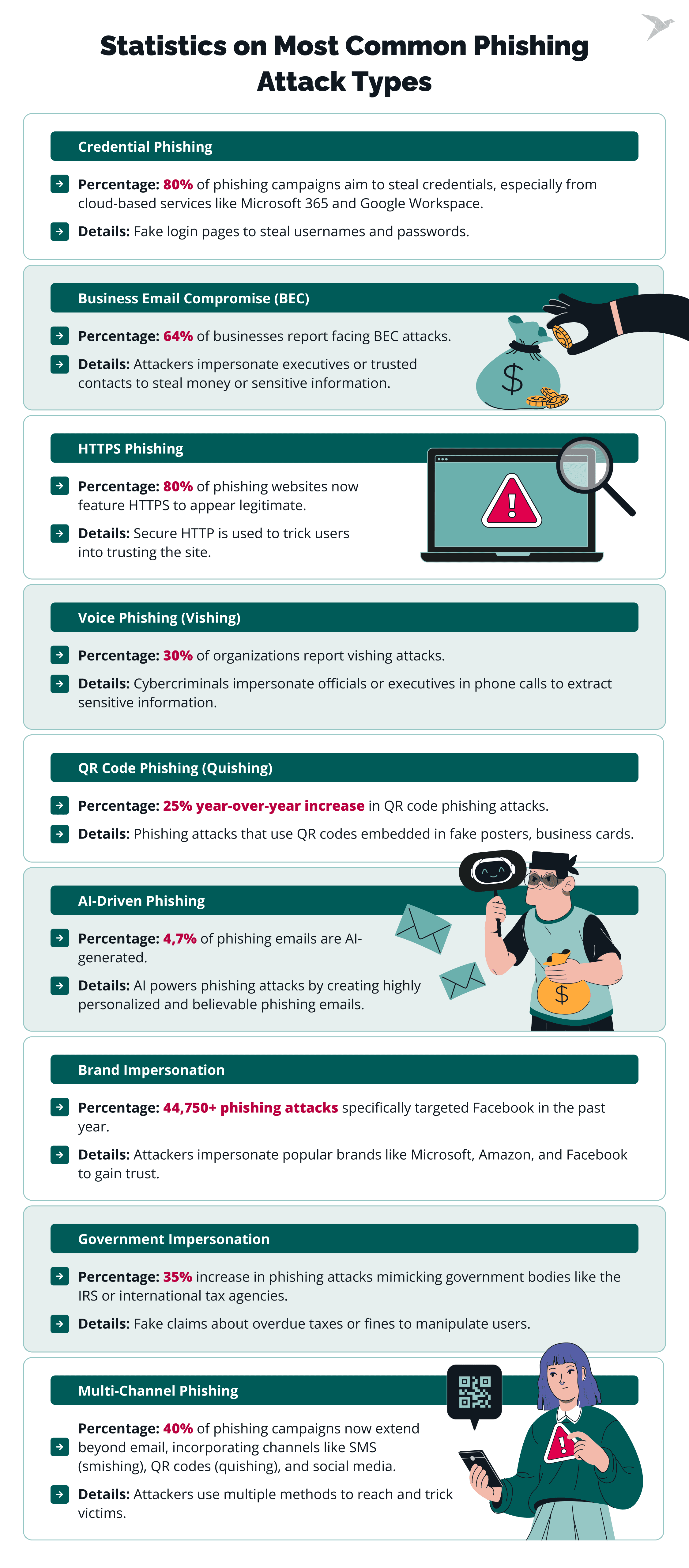
- BEC (business email compromise), credential phishing, and vishing (voice phishing) are the most common scams, while quishing (QR-code phishing) and AI-driven attacks are rising fast.
- The global mean time to identify and contain a breach is 241 days (IBM 2025), and phishing-driven breaches skew longer.
- Cybercrime losses reported to the FBI hit a record $16.6 billion in 2024, up 33% year over year, with phishing/spoofing the most-reported complaint type.
- Phishing now spans email, SMS, social media, and phone calls, making it harder to detect.
Key Metrics of Phishing Attack Statistics
Recent phishing statistics show this type of fraud is one of the most common in cybercrime. Malicious emails imitate legitimate sources convincingly, and even skilled users click links or share information. Here are the numbers that show the full picture:
- Phishing is the initial access vector in about 16% of breaches, and a human element is involved in roughly 60% of them.
- Around 80% of phishing campaigns aim to steal credentials, especially for cloud services like Microsoft 365 and Google Workspace.
- Microsoft was the most-impersonated brand in Q1 2025, appearing in 36% of brand-phishing attempts, followed by Google (12%) and Apple (8%).
- Emails delivering infostealers rose 84% in 2024, with early 2025 up 180% versus 2023.
Sources: KPMG, Gartner, IBM, Microsoft Digital Defense Report 2025
Key Risks of Phishing Attacks
Phishing attacks evolve fast, exploit everyday behaviors, and can lead to serious consequences. About 45% of ransomware is delivered through phishing emails. Here's what to watch for.
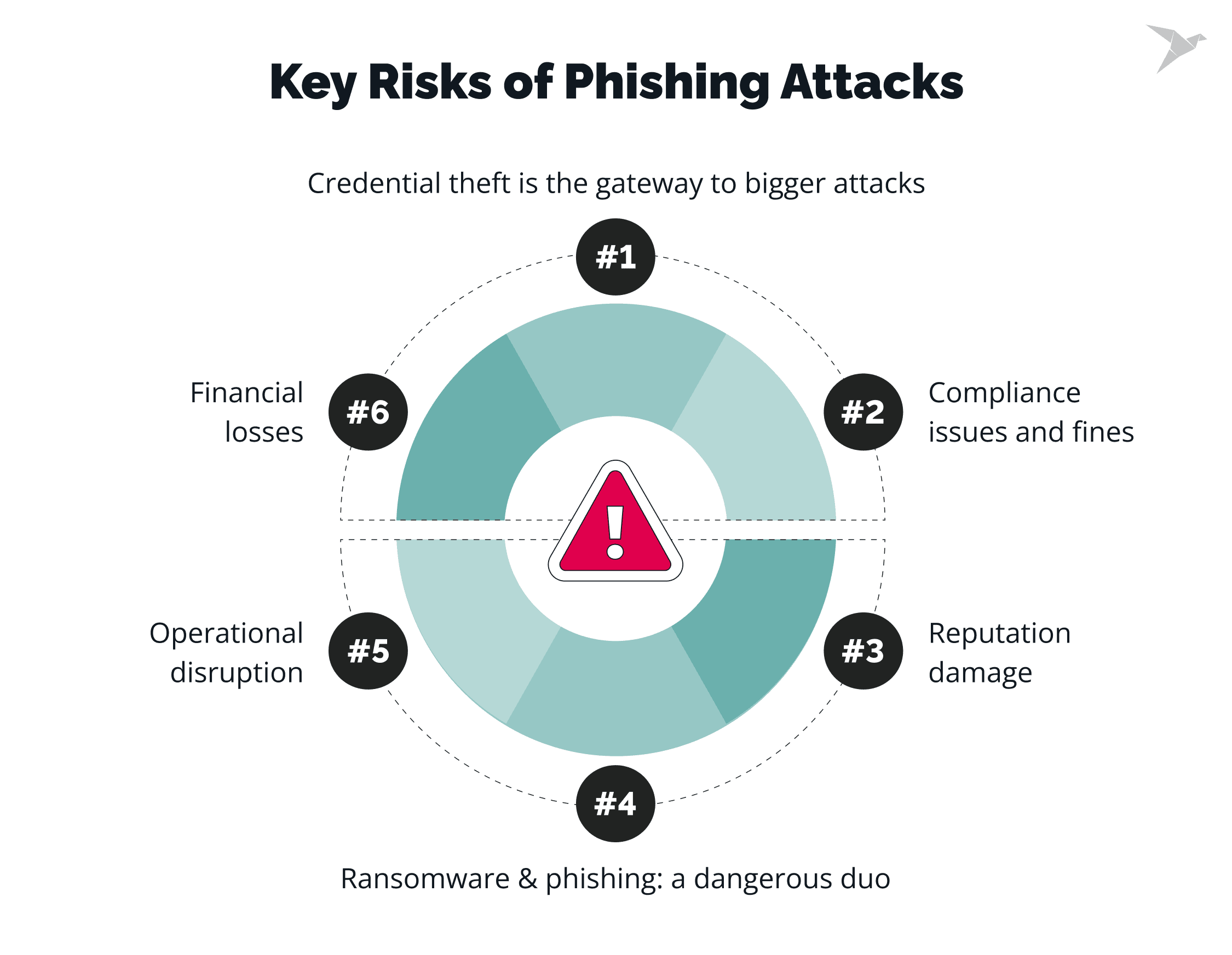
Credential theft is the gateway to bigger attacks
Phishing is a leading method for stealing credentials, especially for cloud platforms like Microsoft 365 and Google Workspace. Attackers use fake login pages so you think you're logging into the real thing, giving them access to sensitive data.
Ransomware and phishing: a dangerous duo
Phishing often leads to ransomware. Once attackers steal credentials, they can deploy ransomware and lock you out of your systems. The cost of that combination is high, both in recovery expenses and reputational damage.
Compliance issues
Phishing is a leading way into corporate networks, and once attackers have employee credentials they can reach sensitive company data. Businesses that suffer phishing-related breaches often face regulatory scrutiny, fines, and lawsuits that compound the financial damage.
Financial losses
Phishing leads to direct financial losses. Stolen credentials enable fraudulent transactions, and phishing-driven ransomware can cost businesses millions to recover.
Reputation damage
A successful phishing attack can harm your reputation. Customers lose trust when their information is compromised, and rebuilding that trust can take years.
Operational disruption
The fallout can mean operational downtime. It can take weeks or months to fully recover, disrupting operations and productivity in the meantime.
Our extensive expertise is at your disposal

Trends of Phishing Attacks
Multi-channel attacks on the rise
Attackers increasingly combine email with SMS (smishing), QR codes (quishing), and voice calls (vishing), and they exploit platforms like Slack, Teams, and social media. According to the APWG, social media and SaaS/webmail were among the most-attacked sectors in 2025 (each roughly 20% of attacks in Q4 2025).
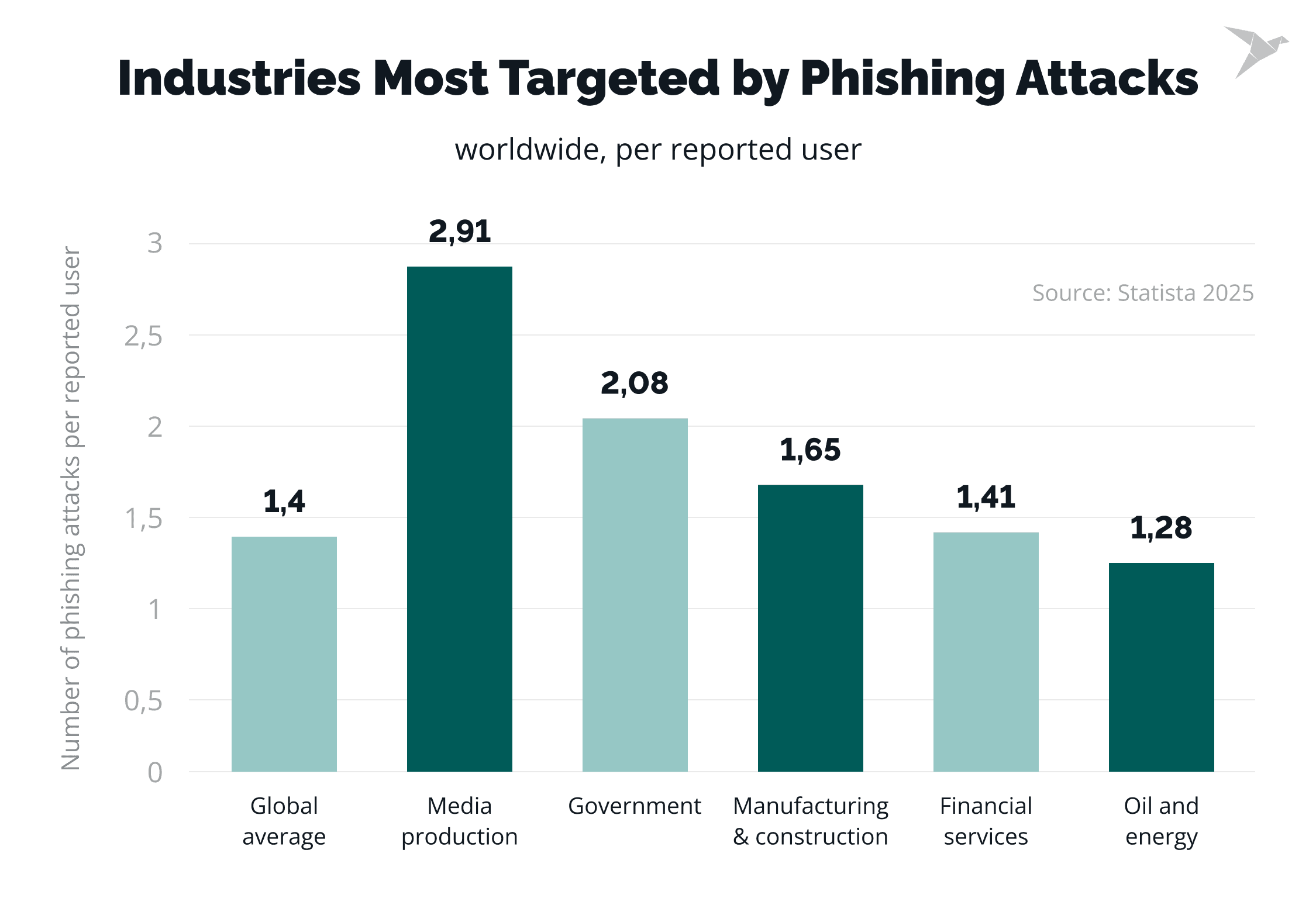
Impact on industries
Healthcare and pharmaceuticals have the highest baseline Phish-prone Percentage (PPP) at 41.9%, with insurance and retail also high (39.2% and 36.5%), against a 33.1% industry-wide baseline (KnowBe4 2025 Phishing by Industry Benchmark).
Healthcare also faces the highest breach costs of any industry: about $7.42 million in 2025, the 14th straight year it ranked first, and healthcare breaches take about 279 days to detect and contain (IBM 2025).
According to the 2025 Verizon DBIR, the median financial loss from a BEC incident is around $50,000.
Vulnerable user segments
New hires are highly vulnerable: they are 44% more likely to fall for phishing than longer-tenured staff, and 71% click a phishing email within their first 90 days (Keepnet 2025 New Hires report).
AI makes attacks more effective
AI-generated phishing emails are now nearly as effective as human-written ones. IBM X-Force found AI could draft a convincing phishing email in about five minutes, versus roughly 16 hours for a human team.
Real case
A 2025 ACM ASIA CCS study sent over 71,000 emails (traditional, QR-code "quishing," and LLM-generated). Quishing was as effective as traditional phishing at driving clicks, and at one company more than 30% of opened LLM-generated emails led to the landing page.
Most phishing emails carry a malicious payload
94% of malware is delivered via email (Verizon DBIR). These emails lead to malware or credential-harvesting sites, putting businesses at risk of widespread compromise.
Personal data is the target
Personal data is among the most common types stolen in breaches and a primary goal of phishing, which harvests it for identity theft and fraud [VERIFY exact "46%" figure/source before publish].
Impersonation campaigns use famous brands
Trusted brands like Microsoft and DocuSign are frequently impersonated to make phishing more convincing. In Q1 2025, Microsoft accounted for 36% of brand-phishing incidents, followed by Google at 12% and Apple at 8% (Check Point).
What Is the Role of AI in Phishing Attacks?
Generative AI is making attacks easier to create. According to IBM, an attacker can now produce a convincing phishing email in around five minutes, versus the roughly 16 hours a human team once needed.
For now, fully AI-generated phishing is still a minority of attacks, but the trend is rising. Gartner predicts generative AI will be involved in 17% of cyberattacks by 2027. Here are the trends worth watching.
Even if the majority of phishing emails are sent by humans, Artificial Intelligence is still a powerful tool that attackers use very actively. Here are a few tendencies that are worrisome and definitely worth paying attention to.
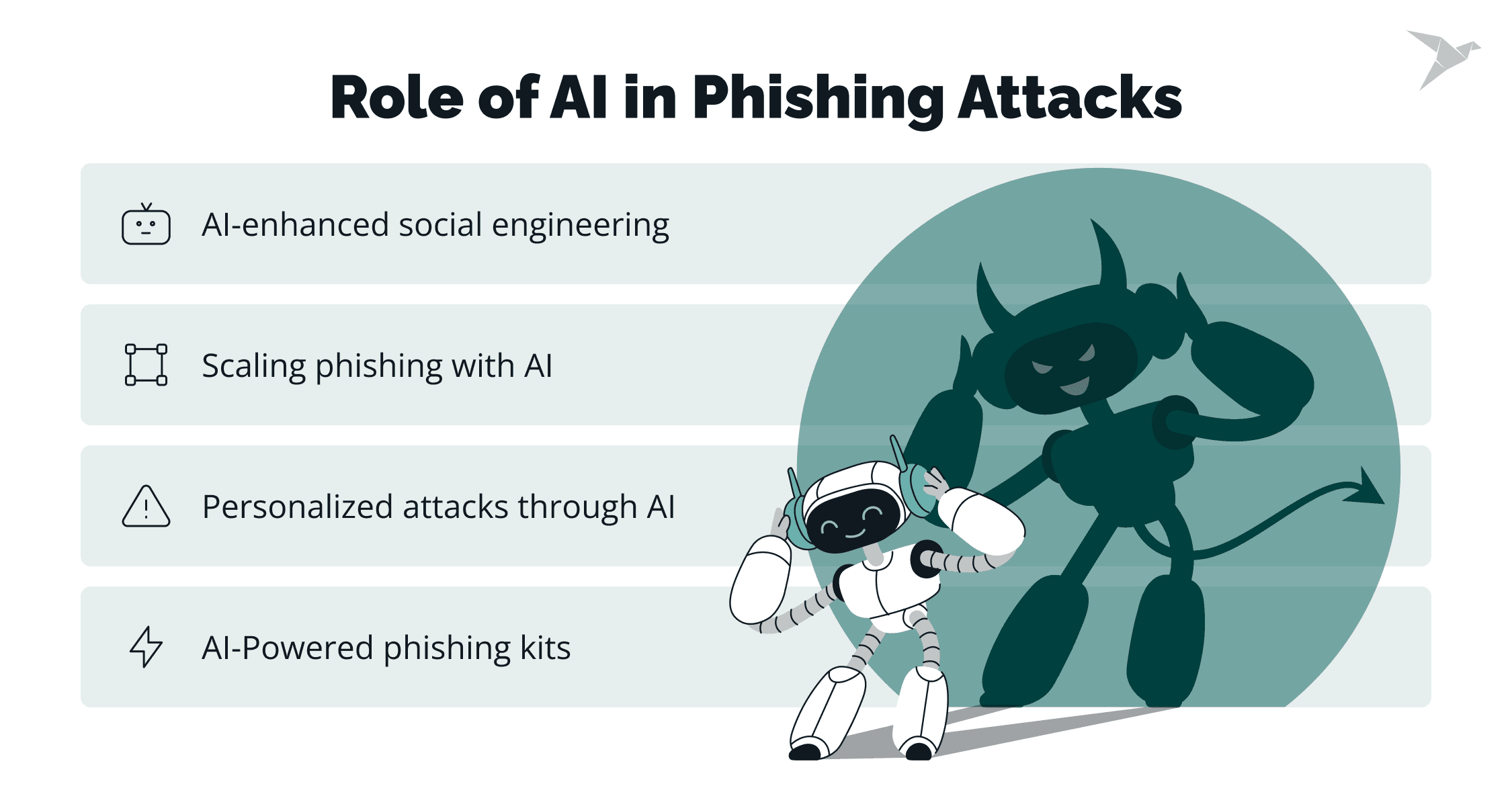
AI-enhanced social engineering
Tools like deepfake video and voice synthesis let attackers impersonate executives and trigger fraudulent actions such as wire transfers. These attacks are hard to detect and becoming more common.
Scaling phishing with AI
AI lets attackers send thousands of highly personalized emails in seconds. That scale, combined with advanced tactics, makes campaigns more dangerous and harder to spot, and increasingly multi-channel (email, voice, deepfake, live chat).
Personalized attacks through AI
Attackers use open-source intelligence from social media, corporate sites, and public records to tailor messages. The added personalization makes scams more credible and raises the odds of success.
AI-powered phishing kits
Alongside traditional kits, AI-powered kits automate the creation and distribution of convincing phishing emails, pushing the boundaries of what attackers can do at scale.
While AI-generated phishing emails still represent a small fraction of phishing incidents, the trend is growing rapidly. As AI continues to evolve, common phishing attacks will become more advanced, personalized, and harder to defend against. The shift to AI-driven phishing is already underway, and organizations must stay alert and prepared for the emerging risks it presents.
Sources: TechTarget, Gartner, McKinsey, Market and Markets, Statista
Top Phishing Statistics Insights for 2026
We’ve covered the basics, and now it’s time for a deep dive into the key insights into how phishing is impacting businesses globally.
How often do phishing attacks happen?
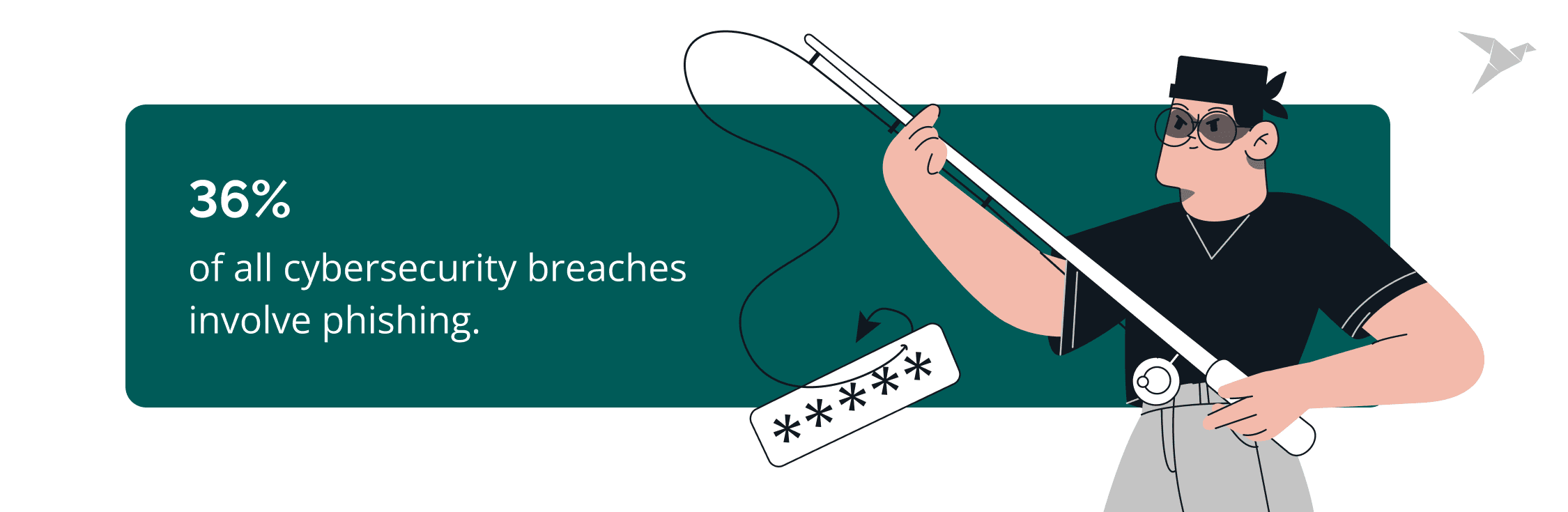
How common is phishing? 36% of all cybersecurity breaches involve phishing.
Over 3.4 billion phishing emails are sent every day, accounting for 1.2% of global email traffic.
94% of malware is delivered by email.
What is the average phishing attack cost?
Phishing was the most common initial attack vector in IBM's 2025 report, with phishing-initiated breaches costing an average of $4.8 million. The U.S. average across all breach types reached $10.22 million.
This figure includes not only immediate recovery and response costs but also long-term repercussions, such as reputational damage and loss of customer trust.
How much money is lost to email scams every year?
Email-based fraud continues to grow. Recent FBI data shows that cybercrime losses reported in 2024 reached a record $16.6 billion, up 33% year over year, with email-driven scams still among the most common causes of financial harm.
The email channel itself also remains heavily abused. In 2025, security researchers found that nearly 45% of all global email traffic was spam, while the number of malicious email attachments exceeded 144 million, a 15% increase from the year before.
What percentage of phishing attacks are successful?
Phishing campaigns continue to evolve as attackers adopt new techniques. In 2025, global phishing activity increased by 58% year over year, while QR-code phishing attacks grew fivefold within just a few months. At their peak, security systems were blocking around 3 million QR-based phishing attempts per day, demonstrating how quickly these attacks can scale.
How many businesses are targeted by spear-phishing attacks?
Studies show that approximately 88% of organizations experience spear-phishing attacks annually. Attackers use a targeted approach where they impersonate trusted individuals or brands to trick employees into revealing sensitive data.
BEC phishing scams statistics
More sophisticated forms of phishing, such as spear phishing and business email compromise, have become more dominant. These attacks focus on specific people or companies, trying to steal important information or large amounts of money.
With the help of AI, these attacks are getting smarter, harder to notice, and more personalized to trick the victim.
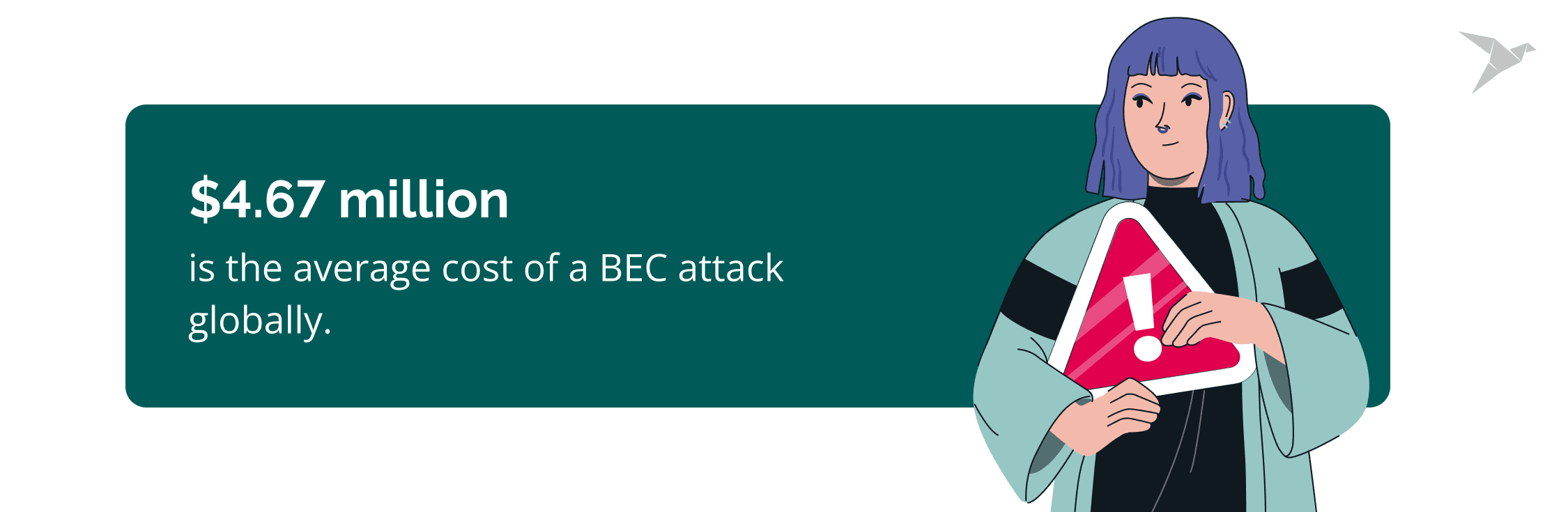
- $4.67 million is the average cost of a BEC attack globally.
- $55.5 billion in exposed losses attributed to BEC scams globally.
- 13% increase in BEC attacks observed in February 2025 alone.
- 73% of BEC attacks originated from free webmail services.
- $487,000 is the average business interruption cost for SMEs hit by BEC.
To strengthen their defence against these attacks, businesses of all sizes use penetration testing services and social engineering testing services.
What percentage of cybersecurity incidents start with employees?
~ 80% of reported cybercrimes are attributed to phishing attacks that begin when an employee falls victim to a phishing attempt.
36% of breaches through phishing were the responsibility of employees.
Sources: KPMG, TechTarget, Market and Markets, IBM, Statista
Stay Ahead of Phishing and Cyber Threats with Tailored Security Solutions
Our cybersecurity team offers specialized services:
- full range of cybersecurity consulting services;
- different types of penetration testing and threat detection (including AI pen testing);
- phishing simulations (including spear phishing campaigns);
- social engineering services;
- security and phishing awareness training.
We focus on identifying all possible security vulnerabilities and strengthening your defenses with a tailored approach to your specific needs.
Phishing remains a major threat, with infostealers delivered via phishing emails increasing by 84%. Our simulations mimic real-world attacks to test employee response, uncover weaknesses, and offer secure data handling practices.
We provide ongoing security training to minimize human error and ensure your team is prepared to handle emerging threats. Our strategic, customized solutions keep your organization secure in a fast-changing threat landscape.

Final Thoughts: What Next?
The top phishing attack statistics show that phishing attacks are developing really fast. Over 50% of cybersecurity professionals highlighted the increasing sophistication of threats as a significant challenge. They also emphasize that outdated infrastructure remains a major barrier to tackling the arising cybersecurity risks.
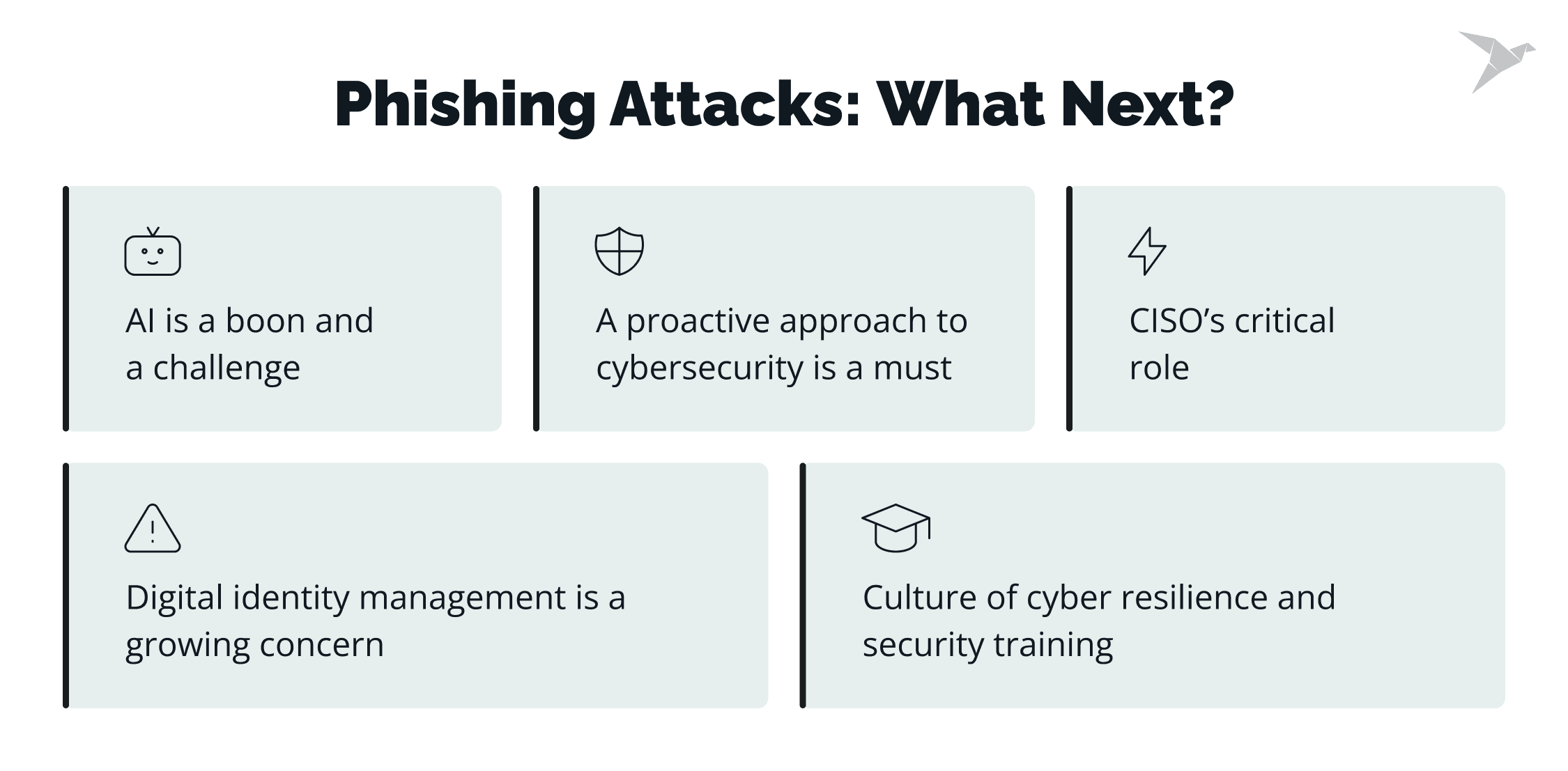
Culture of cyber resilience and security training
By 2027, businesses must develop a culture of cyber resilience and security awareness training that integrates technology, people, and processes. This holistic approach will be essential for industries like energy, finance, and government, which face unique cybersecurity challenges in the age of advanced technologies.
Behavioral training and adaptive simulations are critical in improving cybersecurity resilience. Phishing success rates can be reduced by up to 86% with the right training programs. In particular, mobile-first phishing training is essential, as users are 25-40% more likely to fall for phishing attacks on mobile devices than on desktops. Phishing attacks cost large organizations $15 million annually, or more than $1,500 per employee.
So, businesses must take a proactive and holistic approach to cybersecurity. Focus on both technology and people, and your security posture will be better prepared to handle increasingly sophisticated phishing threats. Build resilience across departments, invest in adaptive defenses, and stay agile to get strong protection in 2026 and beyond.
Invest in adaptive defenses and stay agile to stay protected
FAQ
Phishing attacks involve tricking individuals into revealing sensitive information, such as passwords or financial details. These attacks often occur through fake emails or websites that appear legitimate.
Once a victim clicks a link or interacts with a fraudulent message, attackers can steal their data or gain unauthorized access to systems by impersonating trusted entities.
How often do phishing attacks happen? They now account for 36% of all cybersecurity breaches. The rise of AI and other technologies has made phishing attacks more sophisticated, with email-based phishing attacks delivering infostealers increasing by 84%. These advancements make it harder for traditional defenses to detect phishing, contributing to a higher success rate and greater frequency of incidents.
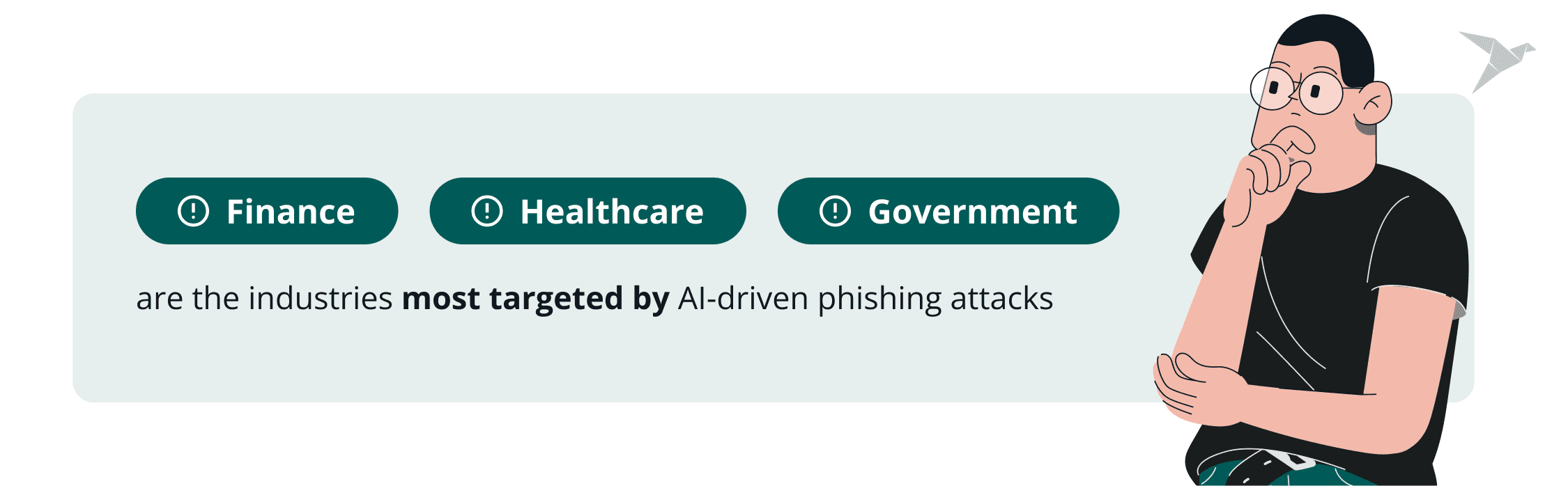
Finance, healthcare, and technology are the most affected sectors. Phishing scammers continue to target industries with valuable data or critical infrastructure.
These industries deal with sensitive information, making them prime targets for attacks like business email compromise and credential phishing. As digital dependence grows, these sectors face heightened risk and require stronger defenses to combat phishing threats.
In 2026 phishing stats, the most common types of phishing include business email compromise (BEC), where attackers impersonate executives to steal funds; credential phishing, which targets login details for cloud services; and voice phishing (vishing), where attackers impersonate trusted figures over the phone.
QR code phishing (quishing) is also on the rise, with attackers using fake codes to trick victims. AI-driven phishing is becoming more prevalent, enabling attackers to create personalized and harder-to-detect phishing emails. These evolving tactics make phishing attacks more challenging to defend against.